Universal access to healthcare is crucial for societal development. However, millions of people worldwide struggle to reach healthcare facilities, particularly in remote areas. Nearly 646 million individuals globally cannot access healthcare within an hour, even with motorised vehicles, and a staggering 3.16 billion people cannot reach a health facility by foot within the same time frame. In Sub-Saharan Africa (SSA) alone, 200 million individuals live more than two hours away from a hospital, while 150 million people live more than an hour away from the nearest health centre. The challenges are particularly acute in remote regions, where poor road infrastructure and limited transport options, coupled with widespread poverty, exacerbate the problem.
During the COVID-19 pandemic, less than 30 percent of people in Africa received a dose of the COVID-19 vaccine even 18 months after vaccine development. Residents of remote, rural areas of Sierra Leone faced severe
difficulties with accessing the vaccine.
In the face of this challenge, the research team conducted an intervention with last-mile delivery of doses and health professionals able to deliver the vaccine to the most inaccessible areas. This was paired with community mobilisation.
ABOUT THE PROJECT
In March 2022, in partnership with the Sierra Leone Ministry of Health and Sanitation (MoHS) and the international non-governmental organization (NGO) Concern Worldwide, the research team, lead by Niccolò F. Meriggi, implemented a cluster randomised control trial with 20,000 Sierra Leoneans across 150 rural villages to deliver vaccine doses and nurses to administer vaccines.
Alongside the vaccines themselves, a social mobilisation team organised conversations with all village leaders (including town chief, mammy queen, town elders, youth and religious leaders) to explain the purpose of the visit, answer questions, and encourage cooperation with vaccine uptake.
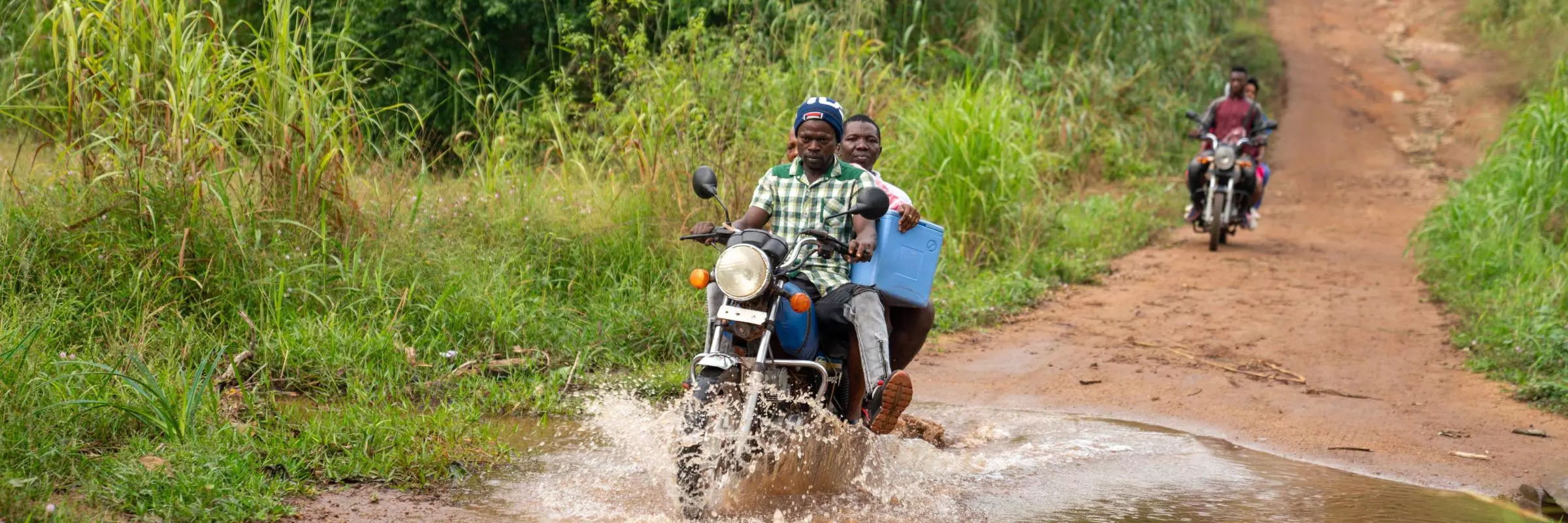
Social mobilisers asked leaders to convene community meetings to allow them to talk directly to village residents about vaccine efficacy and safety and the importance of getting vaccinated, ending in confirmation of the location and timing of mobile vaccination sites that were coming to the villages. The vaccine doses, health staff and social mobilisers often travelled on motorbikes or on boats in order to traverse the difficult terrain required to reach the remote communities.
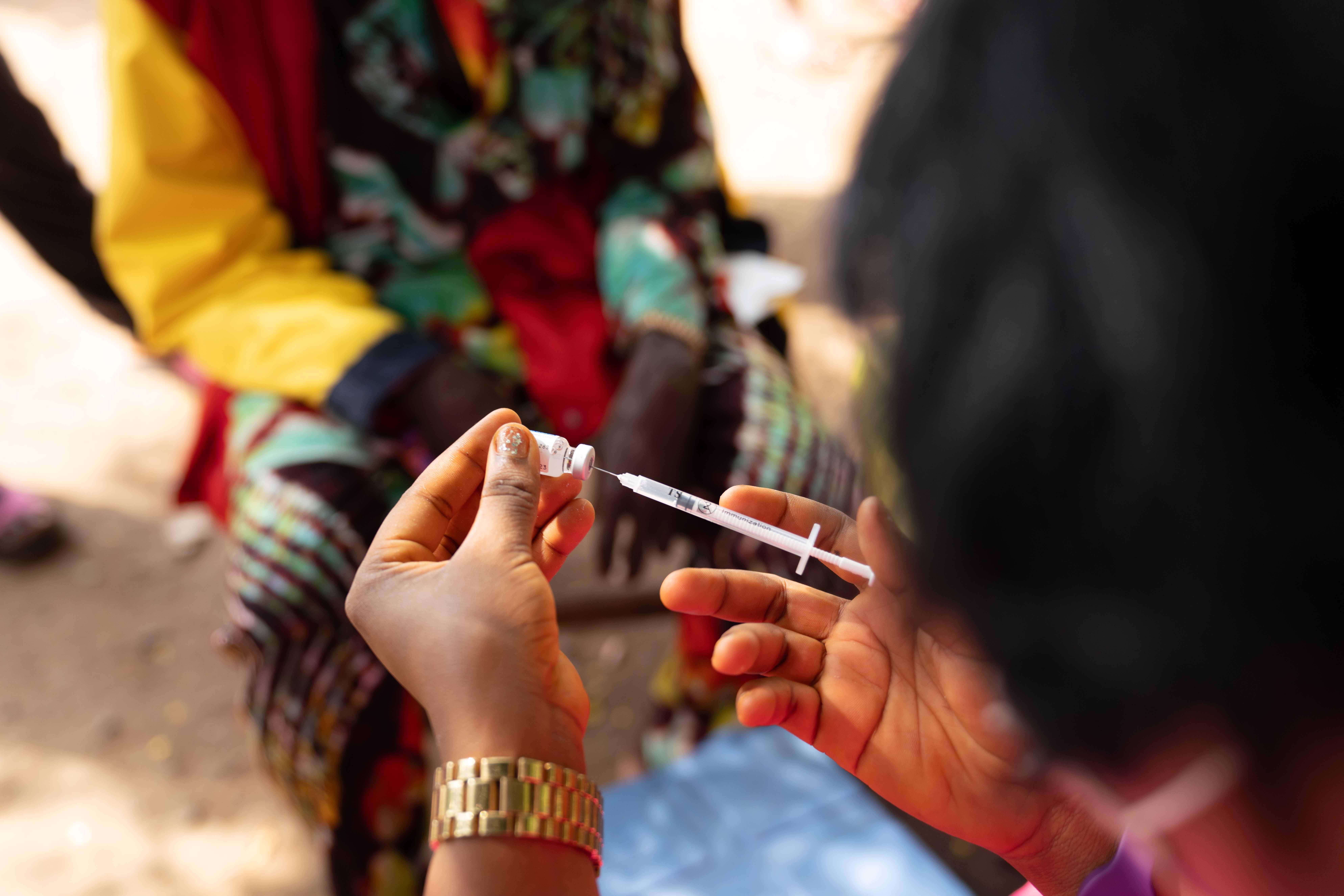
Vaccine sites were set up in central locations, within short walking distances of houses, and remained open from sunrise to sunset for two to three days. Nurses and registration staff were constantly available while social mobilisers entered the communities to provide information to residents about the process.
RESULTS
By December 2022, Sierra Leone had achieved the World Health Organisation's global target to immunise 70% of its adult population against COVID-19.
In the villages included in the intervention, the average number of people vaccinated increased from nine people pre-intervention to 55 people within the two to three day vaccination pop-up clinic dates.
These results show that low vaccination rates are related to deficiencies in access and that a cost-effective intervention is capable of overcoming that deficiency.
DETAILS
Location
Sierra Leone

Associations



PHOTOGRAPHS


PUBLICATIONS AND MORE
Financial Times Article
Living in remote areas shouldn't be a death sentence
Article by Ahmed Mushfiq Mobarak (Yale University) discusses vaccine work.
20 August 2025
Nature Paper
Last-mile Delivery Increases Vaccine Uptake in Sierra Leone
Niccolò F. Meriggi, Maarten Voors, Madison Levine, Vasudha Ramakrishna, Desmond Maada Kangbai, Michael Rozelle, Ella Tyler, Sellu Kallon, Junisa Nabieu, Sarah Cundy and Ahmed Mushfiq Mobarak
Nature, 627, pages 612–619
13 March 2024
CSAE Key Research Takeaways Video
Nature Article
Mobile Delivery of COVID-19 Vaccines Improved Uptake in Rural Sierra Leone
Alison Buttenheim and Harsha Thirumurthy
Nature articles
13 March 2024
Wangeningen News
"Last Mile" Solutions Increase Vaccination Coverage in Poor Countries
13 March 2024
Department of Economics News Article
Niccolo Meriggi's Research Highlights How Cost-Effective Models Prioritising Accessibility Can Revolutionise Rural Vaccinations
18 March 2024