
THE EARLY DAYS OF THE CSAE
By Jan Willem Gunning, Co-Founder of the CSAE
While the Centre was founded in 1986 that was not the start, but only the formalisation of a collaborative effort which had already functioned for some time. For a while it functioned as the Unit for the Study of African Economies. Among the recognised co-founders one was definitely more equal than others: Paul Collier. The idea was his and for many years he would remain the Centre’s driving force.
Paul and I had met in Tanzania in 1976 as members of the World Bank basic economic report mission and we started joint work in Washington immediately thereafter. (The report was so controversial that the Tanzanian government vetoed its publication.) Paul and I became friends and during one of his Washington visits he encouraged me to come to Oxford to do a DPhil at Nuffield.
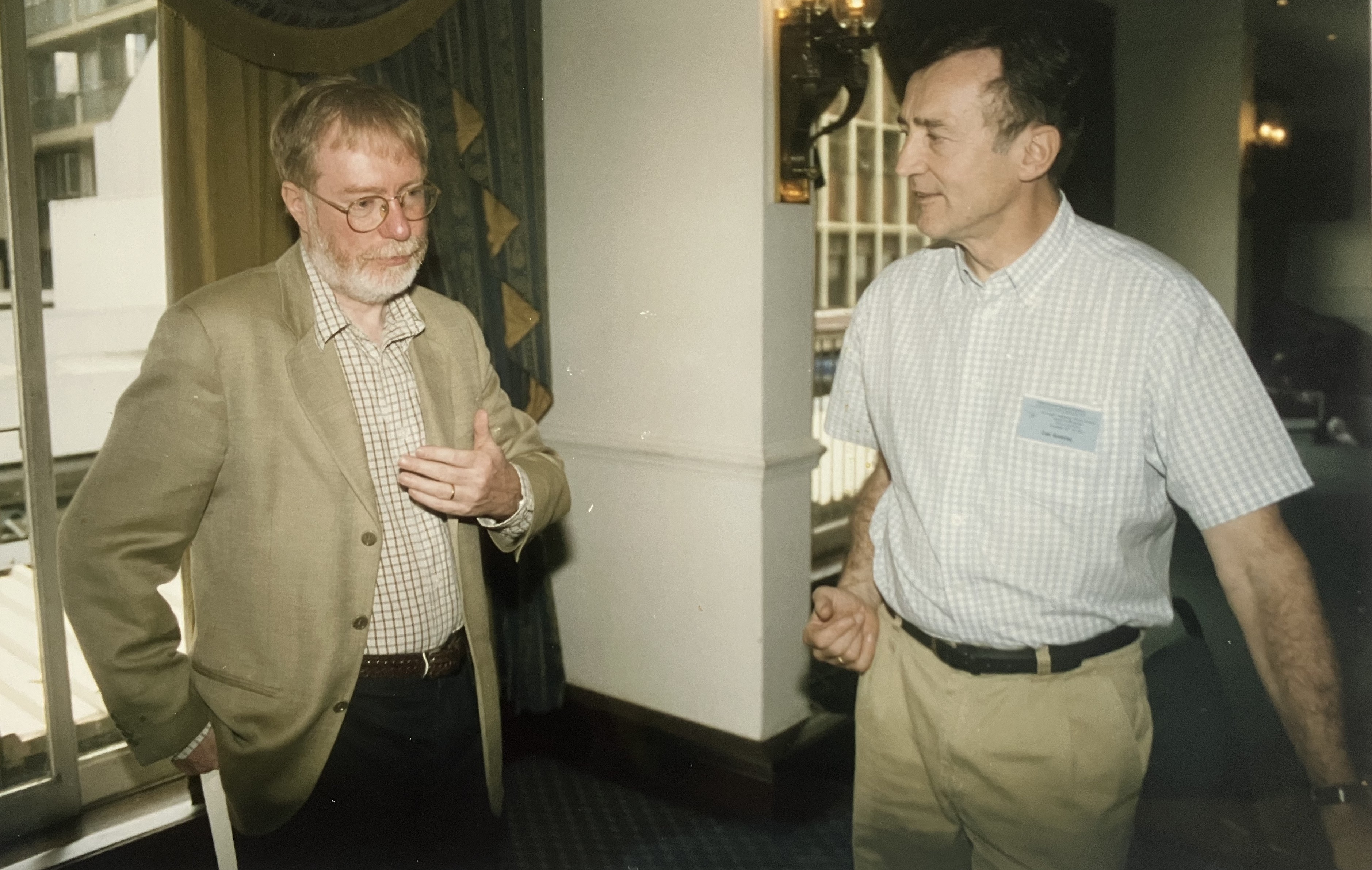
Paul Collier and Jan Willem Gunning in Nairobi.
The objectives of CSAE were ambitious:
academic excellence, combining micro
and macroeconomic work, contributing to
improved performance in Africa. After forty years it is hard to appreciate how unusual this position was at the time.
In 1981 Paul designed a plan to study the impact of the coffee boom of the late 1970s in two coffee producing African countries, Kenya and Tanzania which had chosen quite different policy responses. The World Bank generously funded that project for years. It involved teams in Dar es Salaam (led by Benno Ndulu) and Nairobi and an intense collaboration between Paul and David Bevan in Oxford, Arne Bigsten in Gothenburg and me in Amsterdam. Working together from bases in different countries was not easy in those days: there was no email, there were no cell phones, transferring a file was a nightmare. Our solution was to meet regularly, in Oxford, Amsterdam or Gothenburg. We held meetings of up to a week and stayed in each others’ homes so that we came to know each others’ families. There was a wonderful summer meeting on the Swedish coast with Arne’s family when we completed the project’s first publication. I have fond memories of those years although my children complained at the time that when the group met in Amsterdam only English was spoken at meals.
The study involved rural surveys of farm households in both Kenya and Tanzania, unusual at a time when the collection of micro data was still in its infancy and typically limited to employment or price index data. Detailed information on the economics of farm households was still so rare that when the results were published someone suggested at a North Oxford dinner table that, clearly, we could not possibly have collected those data: we must have made them up. The coffee boom study was nearly completed when the Centre was founded. The objectives of CSAE were ambitious: academic excellence, combining micro and macroeconomic work, contributing to improved performance in Africa. After forty years it is hard to appreciate how unusual this position was at the time. Debates on development policy were often markedly ideological; development economists had a dubious reputation since the the field clearly lacked a firm empirical basis; and economists and social scientists wasted time hating each other instead of collaborating.

Inga Bigsten, Louise Gunning, David Bevan, Paul Collier, Arne Bigsten and the Bigsten and Gunning children in Sweden, 1984.
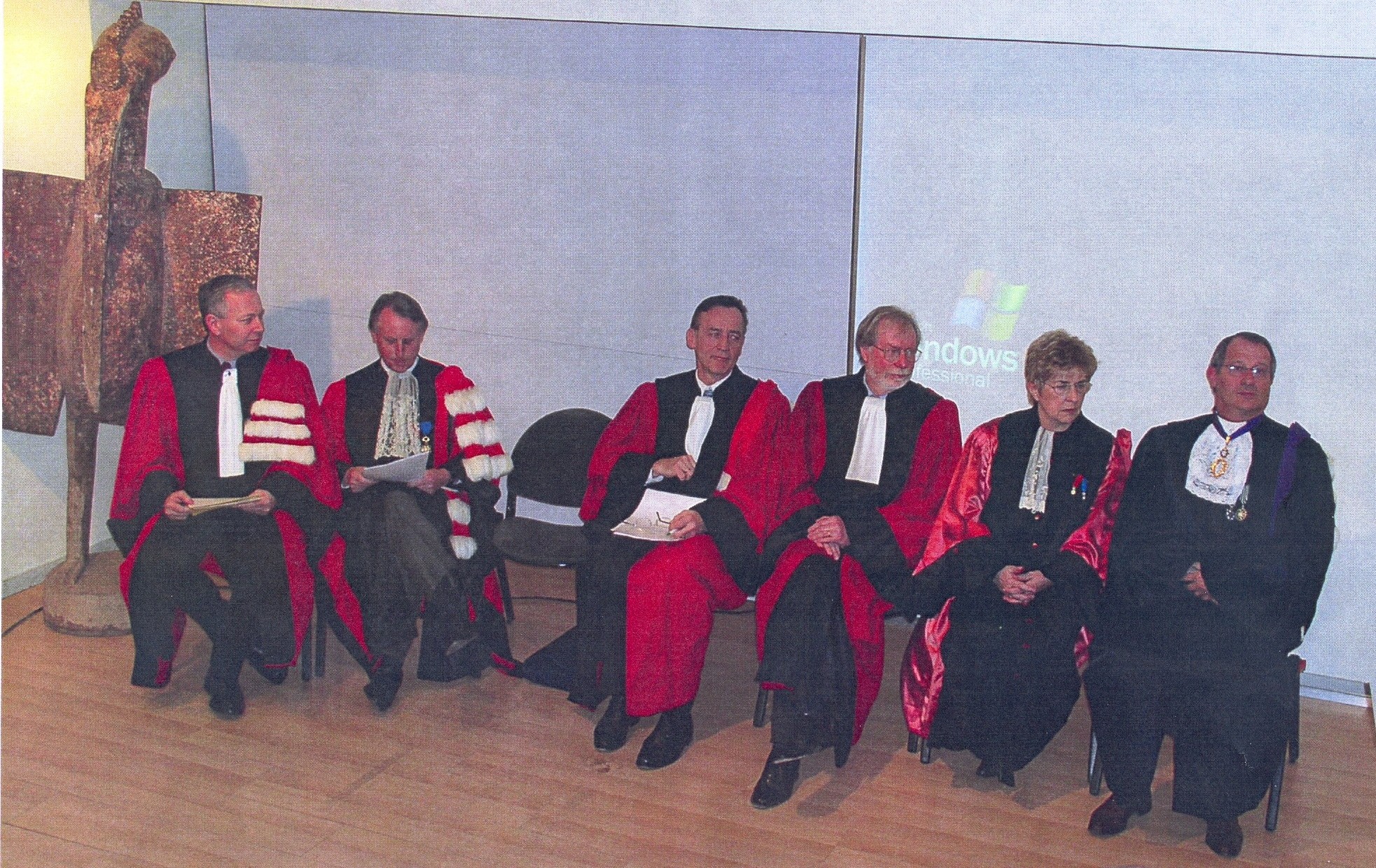
Jan Willem Gunning and Paul Collier receiving honorary doctorates from the University of Auvergne at Clermont-Ferrand for leading roles in economic research on Africa, 2007.
Working together from bases in different
countries was not easy in those days: there was no email, there were no cell phones, transferring a file was a nightmare. Our solution was to meet regularly, in Oxford, Amsterdam or Gothenburg.
Within development economics the dominant faction was that of the ‘structuralists’ at QEH and IDS Sussex. It was the time when import and price controls were advocated in academia and practised in many African countries. The Tanzanian policy of rigidly enforced price controls for thousand of goods was defended by President Nyerere’s economic advisor, a Harvard PhD, as the essence of socialism. During our field work in Tanzania in 1982 we could see the result: extreme shortages of consumer goods even in the favoured urban markets. Our early work on the economics of rationing suggested that the Tanzanian policies would lead to an implosion of the economy and that the remedy advocated by the IMF would make matters worse. We felt we were on to something important and that was an inspiration. There have many such experiences in these past forty years. The opportunity to apply techniques at the frontier of the field to truly important social problems has attracted many excellent researchers, notably the many Africans who have come to the Centre. That alone is an achievement worth celebrating.