
THE AFRICAN ECONOMIC RESEARCH CONSORTIUM AND THE CSAE: BUILDING A GENERATION OF AFRICAN ECONOMISTS
For much of CSAE’s history, one of its most important and enduring relationships has been with the African Economic Research Consortium (AERC), the Nairobi-based organisation established to strengthen economic research and training across Africa. Over more than three decades, the partnership between CSAE and AERC has helped support generations of African economists through research collaboration, postgraduate training, specialist workshops, and academic exchange.
The relationship dates back to the late 1980s, shortly after AERC’s establishment in 1988/89. Founded initially with support from the Rockefeller Foundation and Canadian partners, AERC was created in response to a pressing challenge across the continent: the need for stronger African capacity in macroeconomic analysis and policymaking during a period of major economic adjustment.
At the time, many African governments were negotiating structural adjustment programmes with the International Monetary Fund (IMF) and World Bank. AERC’s mission was to help build a community of African economists capable not only of engaging critically with international financial institutions, but also of producing rigorous, locally grounded economic analysis and policy alternatives of their own.
From the beginning, CSAE scholars were closely involved in that vision. Economists associated with CSAE, including Paul Collier, David Bevan, Jan Willem Gunning, and later Chris Adam, participated in AERC networks and activities in both personal and institutional capacities. The relationship grew organically through shared academic interests and a common commitment to strengthening economics research and training across Africa.
One of the earliest important connections emerged through collaborations between AERC leadership and CSAE academics in Oxford. Benno Ndulu, who later became Governor of the Central Bank of Tanzania and Chair of the AERC Board, played a particularly significant role in deepening the relationship. Alongside figures such as Jeffrey Fine, AERC worked closely with CSAE economists on econometrics workshops and research training initiatives during the early years of the consortium.
Over time, the partnership expanded into multiple areas of activity. AERC developed two interconnected strands of work — a research programme and a training programme — both of which drew heavily on contributions from CSAE academics. The training programme focused on strengthening economics education within African universities.
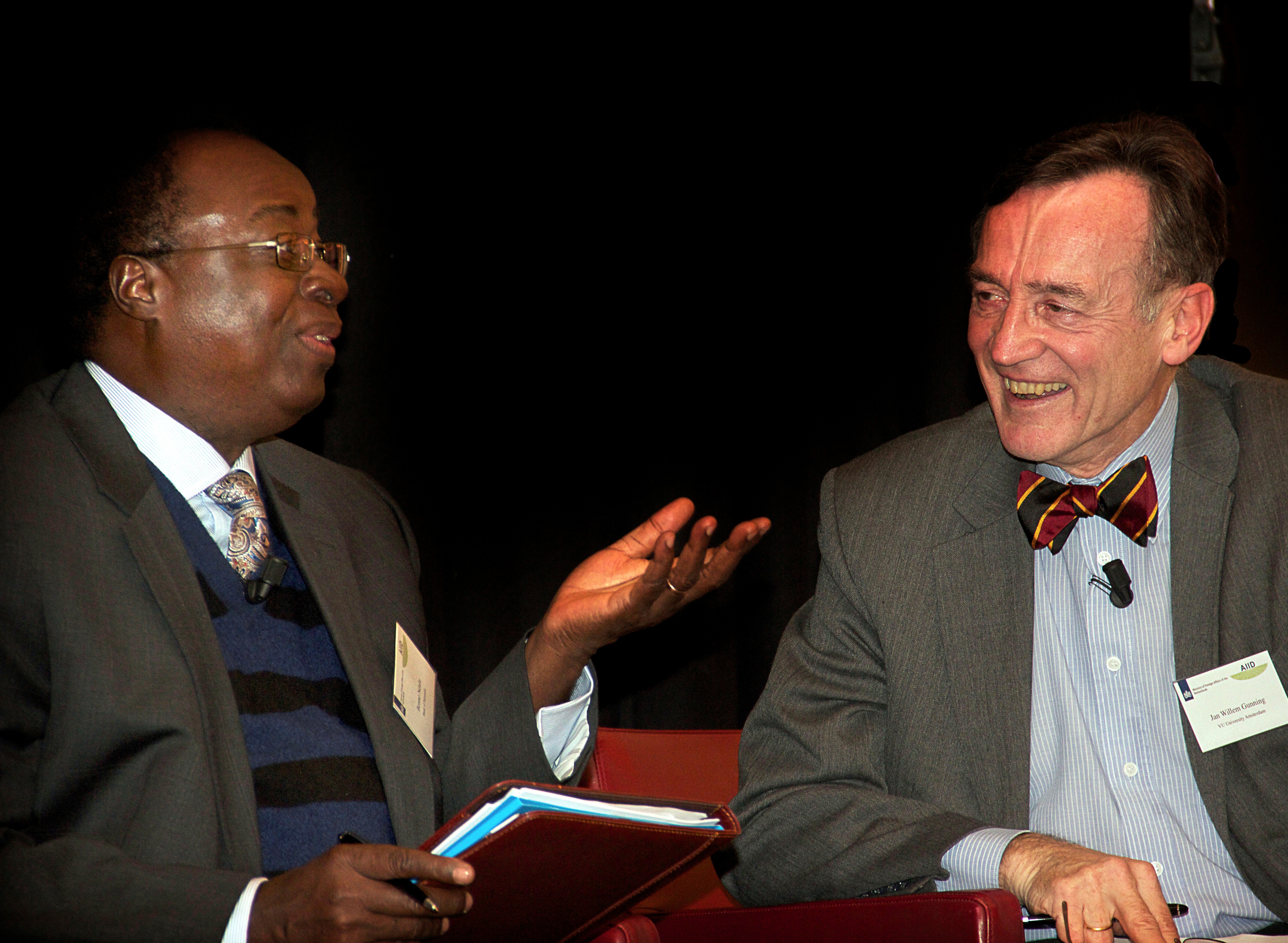
Benno Ndulu and Jan Willem Gunning.
Participating institutions across the continent delivered core Master’s and PhD coursework locally before students came together for intensive regional summer schools and specialist courses. These sessions brought leading economists from Africa and around the world to teach advanced topics in macroeconomics, econometrics, and development economics.
CSAE academics were deeply involved in these activities. Faculty members travelled regularly to teach on AERC programmes, contribute to curriculum development, and supervise emerging researchers. Professor Chris Adam, for example, taught on AERC training programmes from the early 1990s onward, contributing to the advanced quantitative and policy-oriented training that became a hallmark of the consortium.
Alongside formal degree training, AERC also organised specialised thematic workshops and research methods programmes across the continent, often held in Nairobi and other African cities. These intensive workshops, typically lasting between seven and ten days, focused on research design, empirical methods, and policy analysis. Through the 1990s and 2000s, CSAE scholars contributed extensively to these workshops, helping train researchers working on issues ranging from macroeconomic management and fiscal policy to poverty, trade, and public finance.
AERC’s research programme also provided grants and support for African researchers undertaking independent projects. Many scholars who later became senior policymakers, central bankers, academics, and government advisers first developed their research careers through AERC-supported work. Several AERC-funded students later pursued doctoral studies at Oxford and other international universities with links to CSAE.
The impact of these efforts has been profound. Many members of AERC’s earliest cohorts now occupy senior leadership positions in central banks, ministries of finance, universities, and international institutions across Africa. In this sense, the CSAE–AERC relationship contributed not only to academic research, but also to the development of an influential network of African economic policymakers and public intellectuals.
The relationship between CSAE and AERC also became increasingly institutionalised over time. One important milestone was the decision to publish selected proceedings from AERC conferences in the Journal of African Economies (JAE), the journal founded by CSAE in 1992. This partnership helped create a major platform for disseminating high-quality African economic research to an international audience.
AERC scholars and researchers also became a regular presence at the annual CSAE Conference in Oxford. Dedicated AERC sessions at the conference provided opportunities for emerging scholars to present their work, receive feedback, and engage with wider academic networks. These conference links further strengthened the intellectual exchange between the two institutions and helped integrate African researchers into global development economics debates.
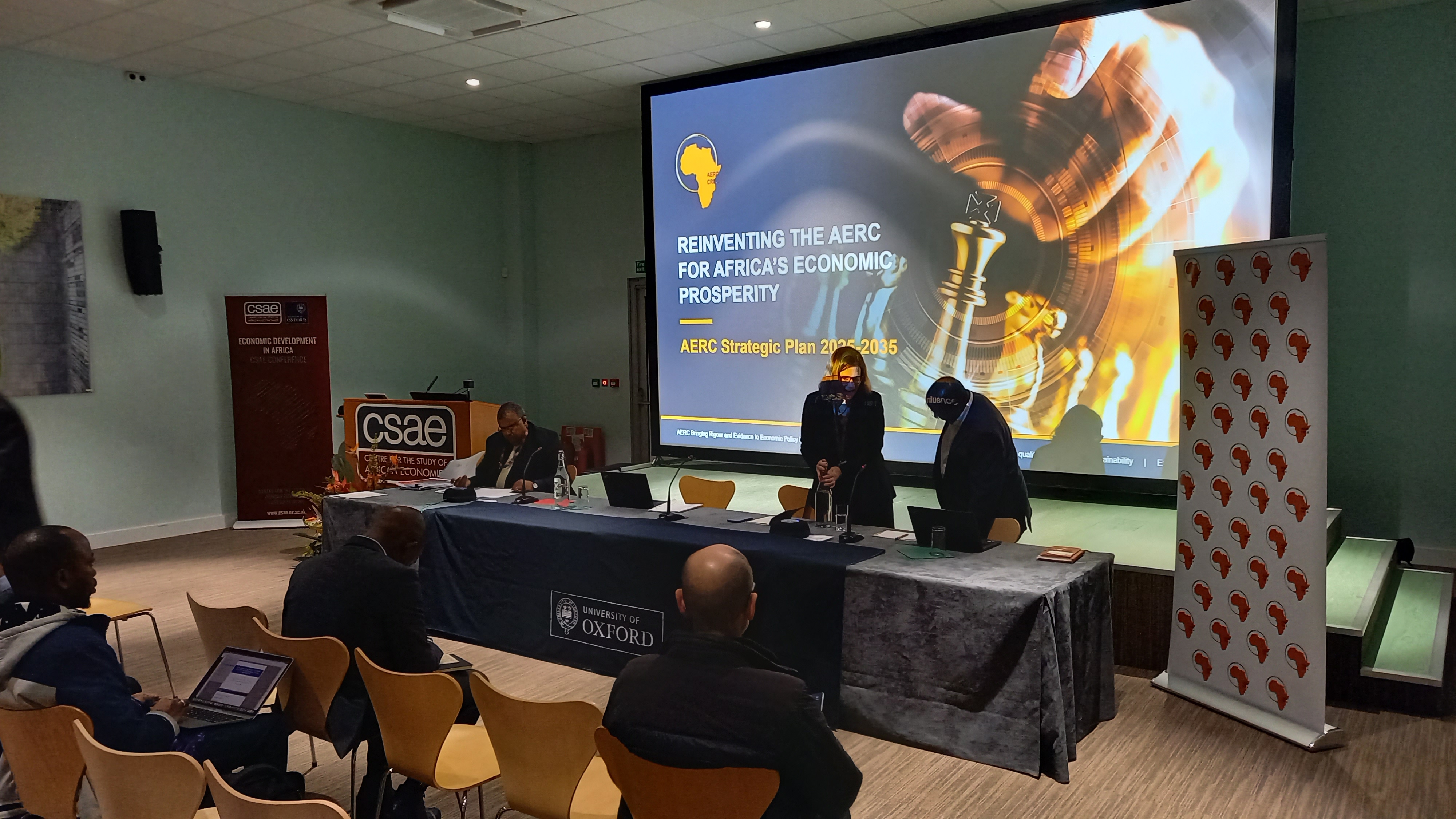
The AERC present a special session to open the CSAE Conference 2025 in Oxford.
Throughout its history, CSAE academics continued to take on leadership roles within AERC itself. David Bevan served as Chair of AERC’s Research Committee during the late 1990s and early 2000s, playing a senior role in guiding the consortium’s research agenda. In 2006, Chris Adam became the first CSAE member to join the AERC Board, serving until 2016. Later, Pramila Krishnan also joined the Board, continuing CSAE’s close involvement in the organisation’s governance and strategic direction.
The partnership was also supported for many years through funding from the UK’s Department for International Development (DFID), later the Foreign, Commonwealth and Development Office (FCDO), which remained a major supporter of AERC until 2025. CSAE scholars often contributed both as academic experts and as independent representatives connected to donor-supported governance structures, helping preserve AERC’s intellectual independence while supporting its long-term sustainability.
Forty years after CSAE’s founding, its relationship with AERC stands as one of the Centre’s most significant contributions to capacity building in African economics. Through teaching, mentoring, collaborative research, publication partnerships, and institutional leadership, CSAE scholars helped support an initiative that transformed economic training and research across the continent. Perhaps most importantly, the partnership helped nurture a generation of African economists whose work continues to shape public policy, academic debate, and economic governance across Africa today.